Why Some Emails Never Reach Your Inbox (Even When Everything Looks Correct)
You hit “send,” the message shows as delivered, and everything seems fine. But sometimes, emails simply never appear in the recipient’s inbox. No error, no warning, just silence. This invisible failure happens more often than most people realize.
The Journey an Email Takes Before You See It
When an email is sent, it travels through multiple servers before reaching the final inbox. This process includes routing, authentication checks, spam filtering, and security validation. If any step fails or looks suspicious, the message may be delayed or blocked entirely.
Common Reasons Emails Don’t Arrive
There are several technical and non-technical reasons why emails never reach their destination:
- The sender’s domain has poor reputation or spam history.
- The recipient’s email provider blocks certain types of messages.
- The message is flagged by spam or security filters.
- The inbox is full or has strict filtering rules.
- The email contains links or content that triggers security systems.
In many cases, neither sender nor receiver is immediately aware that the message failed.
Why Spam Filters Are Getting More Aggressive
Email providers constantly update their filtering systems to protect users from phishing attacks, malware, and unwanted advertising. While this improves security, it can sometimes result in legitimate emails being mistakenly blocked.
This balancing act between security and deliverability is one of the biggest challenges in modern email systems.
The Role of Email Reputation
Every email domain has a reputation score based on its sending behavior. If a domain is associated with spam or suspicious activity, its messages are more likely to be filtered or delayed.
This is why emails from unknown or low-trust sources often do not reach inboxes reliably.
How Users Experience Delivery Failures
From a user’s perspective, email failure is confusing. There is no clear error message in many cases, and messages may silently disappear into spam folders or be blocked before delivery.
This creates uncertainty, especially for important communications like account verification or password recovery.
Reducing Inbox Overload with Smarter Email Use
As email systems become more complex, users are also changing how they manage their online identity. Instead of using a single email for every purpose, many people now separate communication based on importance and usage.
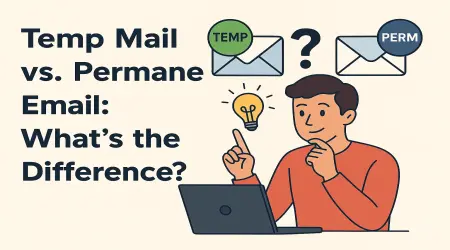
For short-term registrations or low-risk signups, services like Temp Mail are often used to reduce inbox clutter and limit exposure of a primary email address.
When Temporary Email Can Help
- Signing up for one-time downloads
- Testing new platforms or tools
- Accessing short-term free trials
- Joining online communities briefly
- Registering for events or webinars
Using a temporary email in these situations helps separate important communication from temporary activity.
When You Should Avoid It
- Banking and financial services
- Shopping accounts with order history
- Work or business communication
- Cloud storage and subscriptions
- Government or identity-based services
These accounts rely on long-term access and secure email delivery.
The Future of Email Delivery Systems
Email providers are increasingly using AI-driven filtering, real-time reputation scoring, and behavioral analysis to decide whether messages should be delivered. Over time, this will likely improve security but may also make delivery systems more complex.
Understanding how these systems work helps users set realistic expectations about email reliability.
Frequently Asked Questions (FAQ)
Why do emails go missing even when they are sent correctly?
Emails may be blocked by spam filters, rejected due to domain reputation, or redirected to spam or promotion folders.
What is email delivery failure?
Email delivery failure happens when a message cannot reach the recipient’s inbox due to server, filtering, or security issues.
Can emails be blocked without notification?
Yes. Many email systems silently filter or block messages without sending an error back to the sender.
What is email reputation?
Email reputation is a score assigned to a domain based on sending behavior, spam reports, and trust signals.
Why do spam filters block real emails?
Filters sometimes mistakenly block legitimate emails if they resemble spam patterns or come from low-trust sources.
What is a temporary email used for?
A temporary email is used for short-term signups where long-term communication is not needed.
Can using Temp Mail affect email delivery?
Some websites block disposable email domains, which can prevent message delivery or account verification.
Why do emails go to spam instead of inbox?
Spam filters classify emails based on content, sender reputation, and user behavior signals.
How can I improve email delivery success?
Use trusted email providers, avoid suspicious links, and maintain good sender reputation for business emails.
Is email delivery always guaranteed?
No. Email is a best-effort system, and delivery can be affected by multiple filtering and server factors.